Welcome

About Me
Hi, I'm Albert, a heterodox thinker who sometimes feels compelled to express ideas that deviate from accepted beliefs. My work bridges philosophy, mathematics, economics, and engineering, along with whatever else catches my attention as a subject that merits a novel approach. After fifty-two years in the practice of law, I retired at the end of 2025 and now give my full attention to these projects.
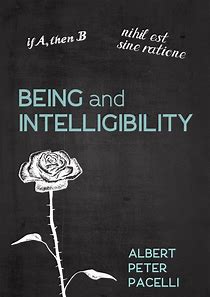
On philosophy, my book Being and Intelligibility (Wipf & Stock, 2017) delves into the dual meanings of existence, posing profound questions like, "What do we mean when we say something 'is'?" and "What is the meaning of human experience?" It's a deep exploration into the essence of being. In my article "The Three Grand Errors of Modern (and Post-Modern) Philosophy," I advocate for the restoration of metaphysics in contemporary thought based upon a return to the classical persistence of the human soul, critiquing the prevailing norms by presenting a fresh perspective on age-old philosophical inquiries. My most recent article, "The Constituent Logic of Being: Identity, Non-Contradiction, Determinacy, and Rendering" (2026), argues that the fundamental logical structures are not laws we bring to things but the constitution by which anything is a being at all, and draws from that the consequence that Being is anhypothetical, standing under no condition by which its obtaining might be settled. It is one of a series of articles developing the ontology I call Transcendent Realism.
On mathematics, I have spent roughly fifty years developing Unified Angular Mathematics, a framework that derives the number systems and the continuum from relational structure rather than positing them. It is the subject of a book in progress, Reason's Arc.
On markets, my book The Speculator’s Edge (John Wiley & Sons, 1989) analyzes the role and methods of speculators in free markets, which is encapsulated in the idea that speculators must buy what nobody wants when nobody wants it and sell what everybody wants when everybody wants it. A forthcoming second edition will soon be available for a new generation of readers.
On economics, my article "The Efficient Disequilibrium: A New Theory of the Business Cycle" presents a novel Augmented National Income Equilibrium (NIE) Model Business Cycle theory. This theory posits that business cycles are not caused by external shocks but are instead an inherent, efficient outcome of the dynamic interaction between consumption and investment, mediated by the pure interest rate. The model uses income-normalized variables to isolate these core dynamics and demonstrate the impossibility of a steady-state equilibrium. Empirical analysis using US data from 1962 to 2024 supports the model's predictions and offers policy implications emphasizing the importance of allowing natural economic adjustments rather than attempting to suppress cyclical fluctuations. The model further refines the concept of a natural interest rate, proposing a dynamic rate rather than a static one.
On technology, I am the founder of Relational Phase Processing LLC, a defense technology company in Palm Coast, Florida, where I serve as Principal Investigator. The work applies a deterministic approach to signal and sensor identity, and it has produced a portfolio of pending patent applications.
Academically, I earned a BA and MA in political philosophy from the University of Pennsylvania (1974) and a JD from the New York University School of Law (1977). These foundations continue to shape my exploration of both philosophical and economic thought, as I seek to understand the complex interplay between ideas and market dynamics.
On this site, you will find information about my research and books, as well as occasional blogs about philosophical and economic topics, including how they reflect themselves in current events.
Why Philosophy?
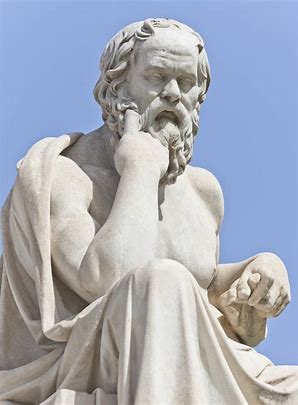 Although the question, “Why philosophy?” is often asked by philosophers and their students, it is one that is uniquely modern. Most philosophers, and perhaps only a few others, are aware that until the advent of the Scientific Revolution, philosophy was the all-embracing science. There was no meaningful distinction between philosophy, on the one hand, and mathematics, the natural sciences, psychology, or sociology, on the other. All of these were simply part of the pursuit of what was presumed to be an attainably homogenous human understanding of self and the world. The question of the value of philosophy was therefore identical to the question of the value of knowledge itself, and, outside of sophist or skeptic circles, it would have been met with ridicule. I do not mean to suggest that at any one time since Thales of Miletus initiated the Western philosophical tradition circa the sixth century B.C., that philosophy has been conducted by more than a small number of scholars. Neither do I mean that the value of philosophy has ever been appreciated by a large portion of the men and women of commerce or other more practical concerns. Instead, what I am saying is that in the philosophical community, prior to the modern era which began with the mind-body dualism of René Descartes in the early 17th century A.D., the value of philosophy was taken as a given. Indeed, from the ancient Greeks through the church philosophers up to and including St. Thomas Aquinas in the high Middle Ages, it was generally recognized that humankind’s faculty of objective reason, which set it apart from the other creatures of the earth, rendered philosophic contemplation humankind’s highest vocation. But the Scientific Revolution, which followed not long afterward, brought with it a new, “scientific” method of investigating physical realities that is inapplicable to the study of philosophy’s metaphysical questions. The result was the separation of the empirical sciences from contemplative philosophy and the rapid development of demonstrable facts about the world of the former’s domain. Then, the unthinkable happened—the disparity between the achievements of the physical, social, and psychological sciences and the lack of progress of what remained of philosophy grew to be so great that philosophy ceased to be considered to be a science at all! And so, it was only a question of time before philosophers would begin to ask the question “Why philosophy?”